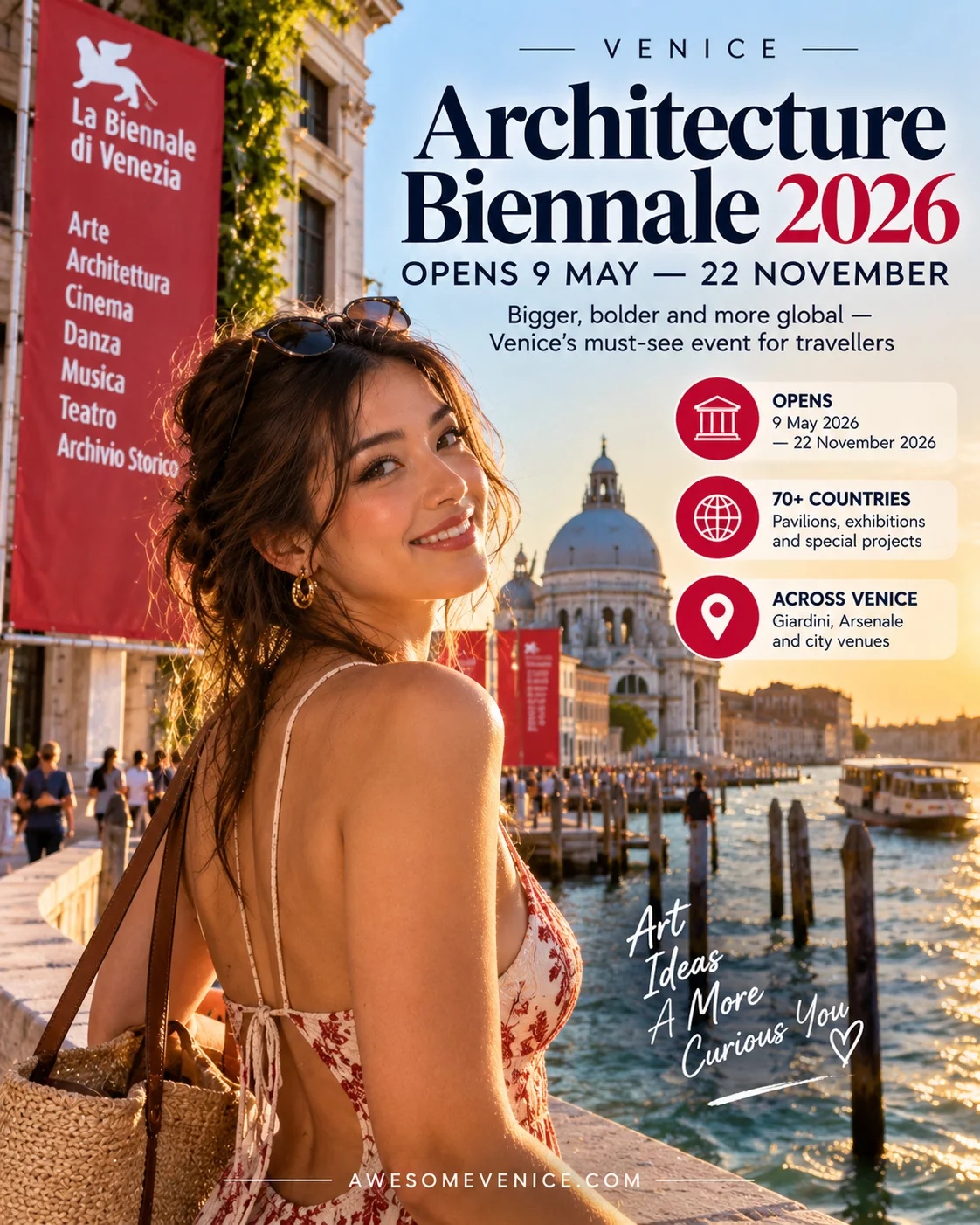
The Venice Biennale is one of the most important recurring events in contemporary art and architecture worldwide, and — unlike Carnevale — runs for months rather than days, making it much easier to fit into a normal trip.

How it's structured

The Biennale alternates annually between an Art edition and an Architecture edition, each running roughly from late spring through autumn. National pavilions, many purpose-built decades ago, fill the Giardini park in Castello, with additional exhibitions spread through the vast former shipyards of the Arsenale and venues across the city.

Why it's worth visiting even if you're not an art specialist

The pavilions themselves — modernist and historic architecture built by dozens of different countries side by side in one park — are worth seeing as objects, independent of the art inside them. The Arsenale venue also gives rare public access to part of Venice's historic naval shipyard, otherwise closed to visitors.

Planning around it

The Biennale's opening week, typically in late spring, draws the international art world to Venice and is one of the busiest, most expensive periods to visit alongside Carnevale. Visiting later in the run — even into September or October — gets the same exhibitions with a much calmer city around them.

Tickets

Full-access passes cover both Giardini and Arsenale venues over multiple days, useful if you want to see both properly rather than rushing one in an afternoon.