
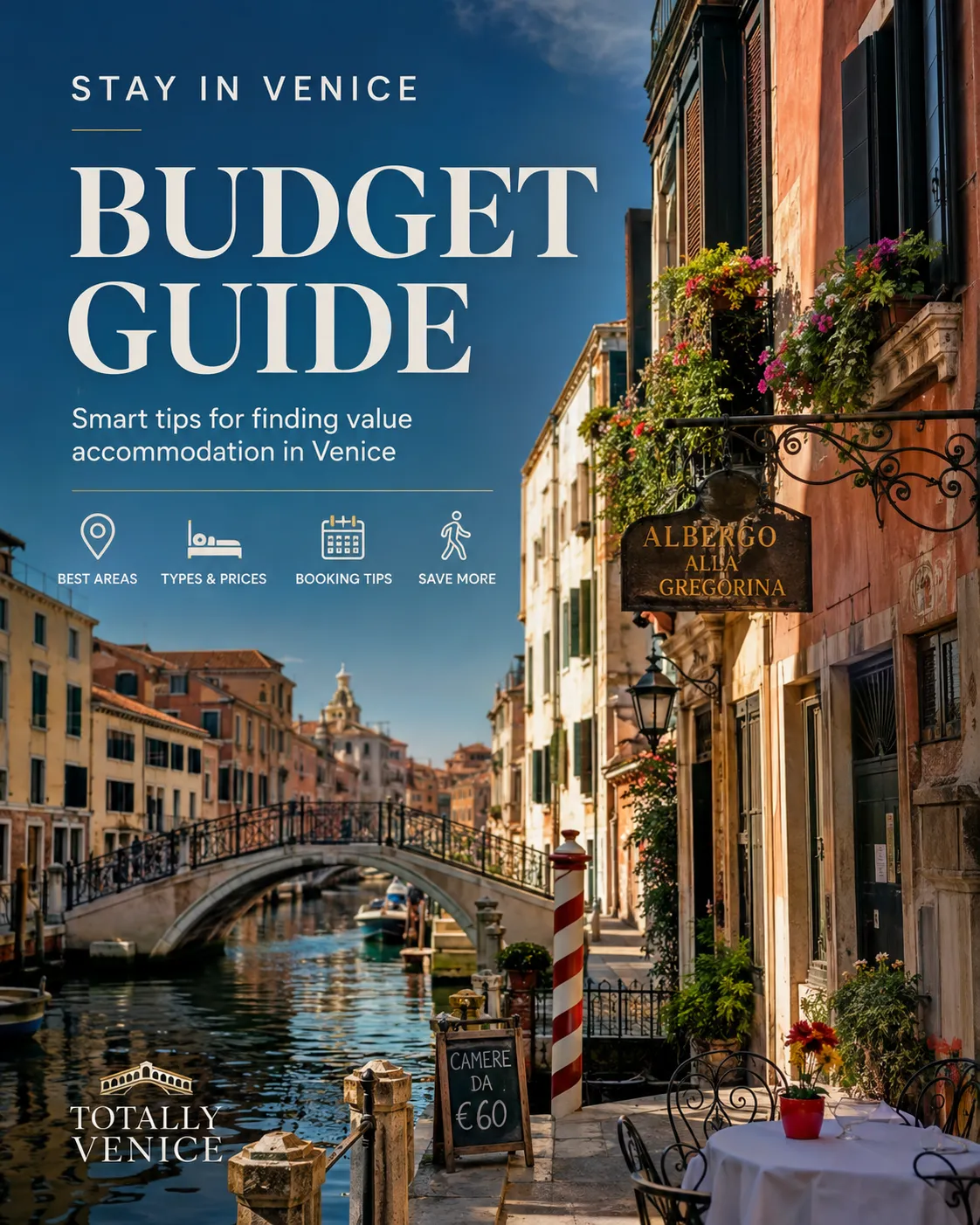
Venice has a reputation as one of Europe's more expensive cities — largely deserved around St Mark's Square, less so a few streets back.

Accommodation, roughly

  • Budget (hostel dorm or simple guesthouse): expect a modest, no-frills room, usually a walk or short vaporetto ride from the centre.
  • Mid-range (3-star hotel or B&B): comfortable, well-located rooms across most sestieri.
  • Splurge (4–5 star or canal-view): Venice's grand hotels and boutique palazzo conversions, priced accordingly — especially anything with a genuine Grand Canal view.

Prices swing hard by season: expect a significant premium during Carnevale, Easter week, the Biennale opening and September, and much softer rates in January, early February and late November.

Food, roughly

  • A cicchetto (small bar snack) with a glass of wine at a standing bacaro: a few euros — the single best value meal format in the city.
  • A sit-down trattoria dinner: moderate, more if you sit outside on a prime canal-front terrace.
  • Coffee at the bar vs coffee seated at a café table in Piazza San Marco: the same espresso can cost several times more the moment you sit down under an orchestra — standing at the bar is standard local practice and dramatically cheaper.

Where the money actually goes

The Venice access fee for day-trippers (€5–10, on around 60 dates in spring/summer) is a real but modest line item, and doesn't apply to overnight guests. Vaporetto tickets add up fast if bought individually — a multi-day travel card usually pays for itself after a handful of rides.

Saving moves that work

  • Eat where you see Venetian, not tour-group, crowds — generally a few streets back from any landmark.
  • Book major sights with timed entry in advance to skip queueing fees and wasted time.
  • Consider Mestre, on the mainland, for a genuinely budget base with a 10-minute train into Santa Lucia — a common trade-off for longer stays.