
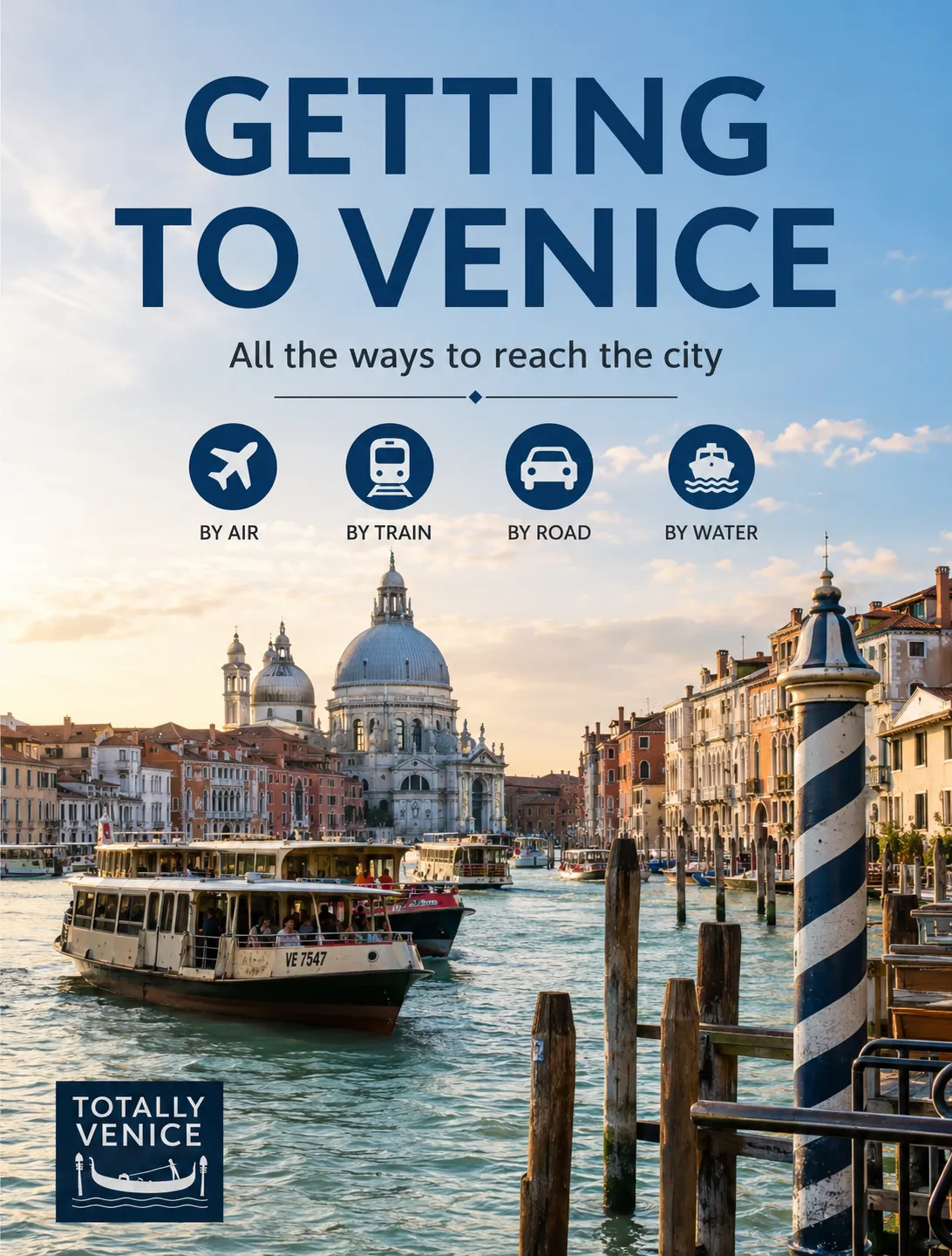
Venice sits at the end of a 4 km road-and-rail causeway across the lagoon, so however you arrive, your journey ends the same way: on foot or by boat, because no cars cross into the historic centre.
By air
Venice Marco Polo Airport (VCE) is the main gateway, about 8 km north of the city on the lagoon shore. From there you have three practical options:
- Alilaguna water bus — slow but scenic, running directly to stops around the city (around 90 minutes to San Marco).
- ATVO or ACTV bus to Piazzale Roma, then walk or take a vaporetto (about 20 minutes to Piazzale Roma).
- Water taxi — fastest and most expensive, door-to-door by private boat.
Treviso Airport (TSF) is used by some budget carriers and sits about 30 km away; a shuttle bus connects it to Piazzale Roma or Venice's Mestre train station in roughly an hour.
By train
Trains from across Italy and neighbouring countries terminate at Venezia Santa Lucia, which is the only station actually on the historic island — step outside and the Grand Canal is right in front of you. Some trains stop first at Venezia Mestre on the mainland; if you're only going to the historic centre, stay on for the extra 10-minute hop across the causeway to Santa Lucia.
By car
Driving into the historic centre is not possible — cars stop at Piazzale Roma or the Tronchetto car park, both at the mainland end of the causeway. Parking here is expensive; many visitors instead park at Mestre or Fusina and take a train or ferry in.
By cruise or ferry
Larger cruise ships now dock at Marghera on the mainland rather than sailing the Giudecca Canal, with a shuttle transfer into the city. Smaller ferries from Croatia and Greece use the Stazione Marittima terminal, a short walk or vaporetto ride from Piazzale Roma.
Good to know
Whatever you arrive by, your last leg into the historic centre will be on foot or by vaporetto — budget time (and cash for luggage-friendly transport) for that final stretch.