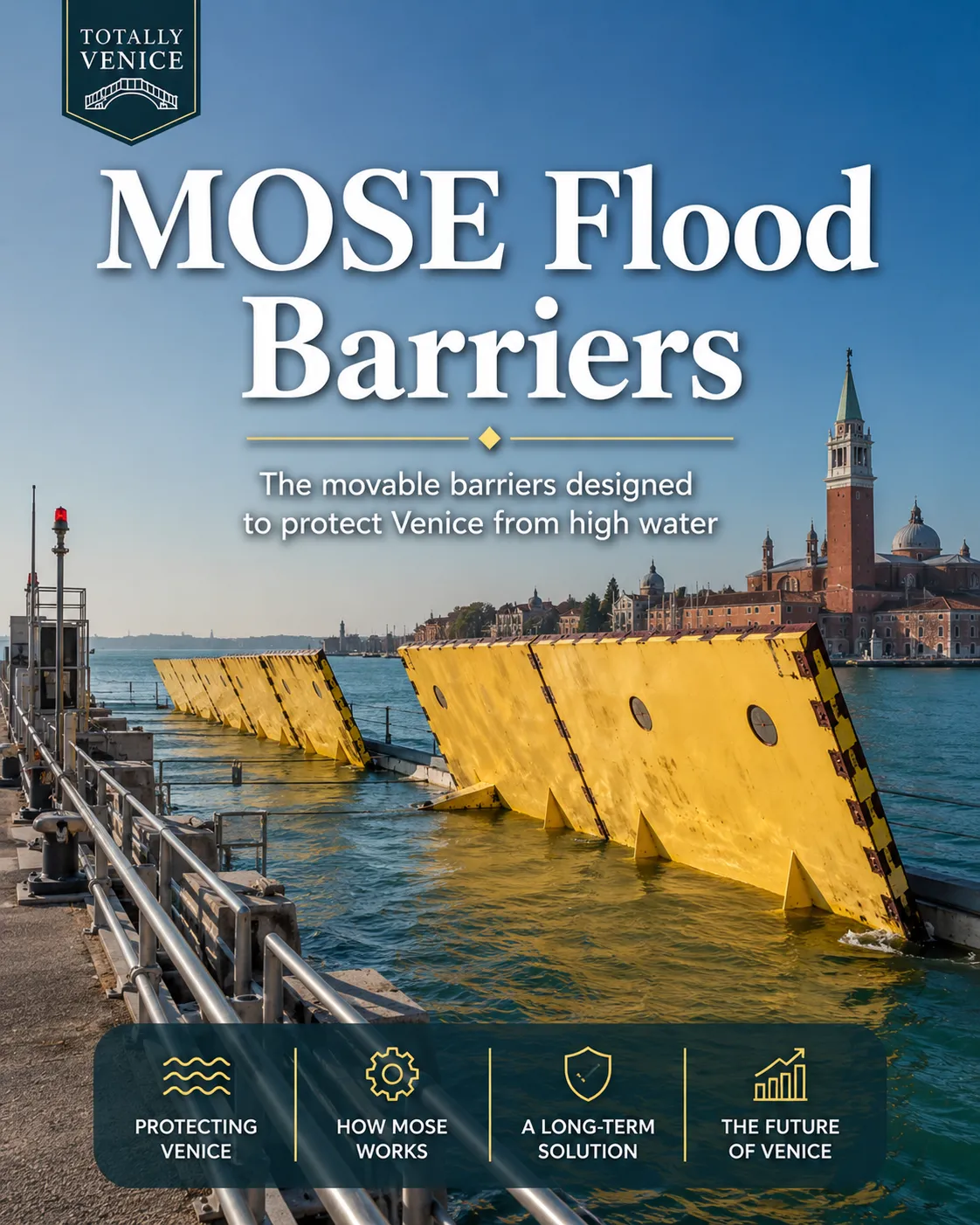
MOSE (Modulo Sperimentale Elettromeccanico) is the mobile barrier system built across the three inlets connecting the Venetian lagoon to the Adriatic Sea, designed to hold back exceptionally high tides before they can flood the city.

How it works

Rows of hollow steel gates sit on the seabed at each lagoon inlet, normally filled with water and invisible below the surface. When a sufficiently high tide is forecast, the gates are pumped full of compressed air, causing them to rise and temporarily seal the inlet — cutting the lagoon off from the sea until the tide passes.

What it's changed

Since becoming operational in 2020, MOSE has been raised for dozens of exceptional tide events, and the city has avoided a repeat of the catastrophic November 2019 flooding that put roughly 80% of Venice underwater. Minor, ankle-deep flooding in low-lying spots like St Mark's Square can still occur on ordinary high-water days that don't trigger a full barrier closure — raised walkways still go up for these more routine events.

Why it's still discussed

The system has been debated over its cost, construction timeline, and long-term maintenance needs, and closing the lagoon too often carries its own ecological trade-offs for the lagoon's tidal ecosystem — so barrier closures are a genuinely deliberate, forecast-driven decision rather than an automatic response to every high tide.

What it means for visitors

You're very unlikely to encounter the serious flooding Venice was known for pre-2020. Minor high water is still a normal winter occurrence worth packing for — waterproof, easily removable footwear is the standard local solution on the handful of days it happens.