
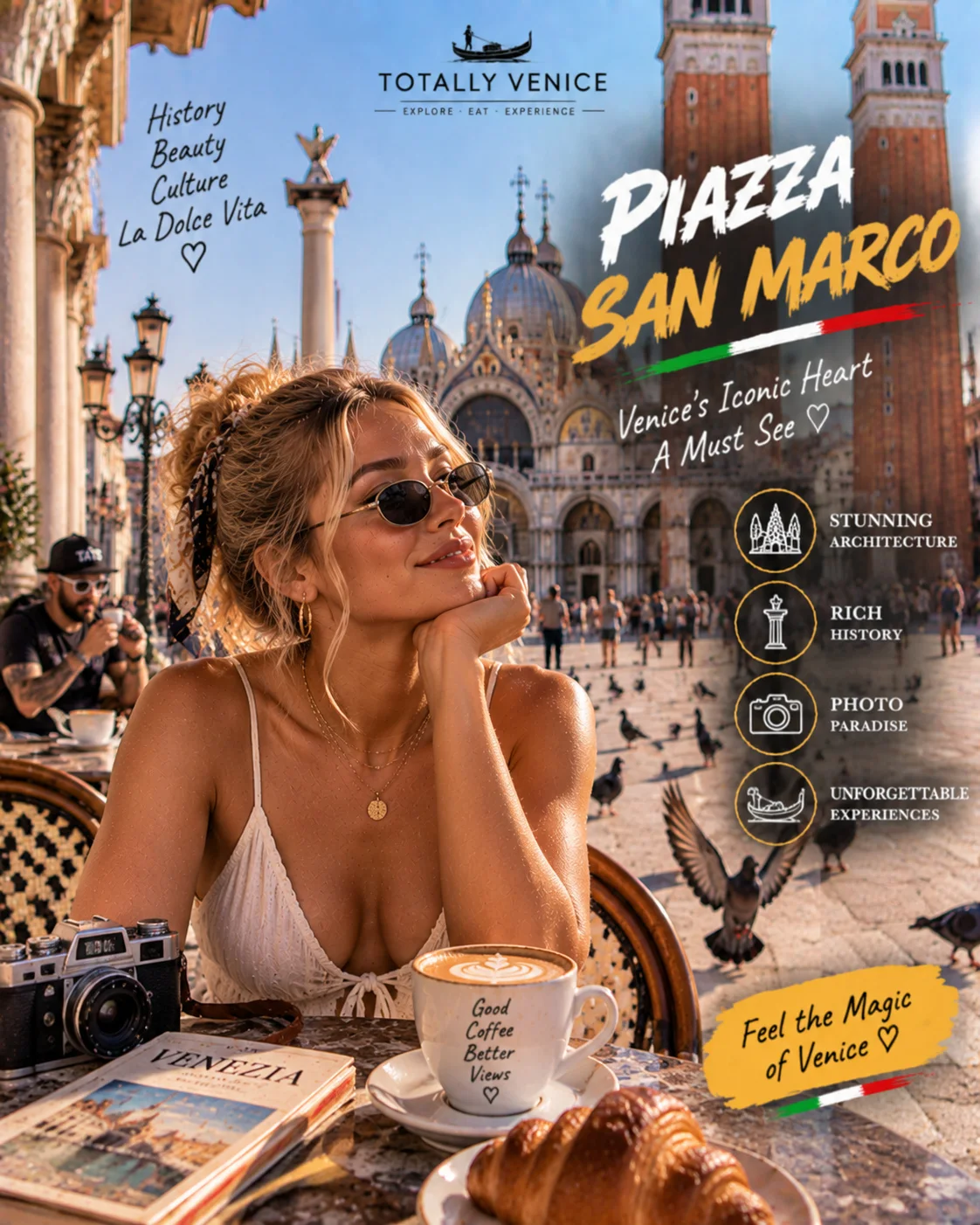
Piazza San Marco is one of the most visited squares in the world — which means most visitors arrive already certain they know what to expect, and most are still caught off guard by the actual experience of standing in it.
What the square actually is
Technically, Venice has only one piazza — this one. Every other square in the city is a campo. San Marco was the political, ceremonial and commercial centre of the Republic for over a millennium.
The square is L-shaped, the longer section running from the Basilica west toward the Correr Museum, and the shorter arm (the piazzetta) running south toward the water, flanked by the Doge's Palace.
What it contains
- Basilica di San Marco — gold-domed cathedral. See our Basilica guide.
- Campanile — 99-metre bell tower; the view from the top is the best orientation tool in the city.
- Doge's Palace — the Gothic-arcaded palace edging the piazzetta. See our Doge's Palace guide.
- Museo Correr — civic museum with Canova sculptures.
- Torre dell'Orologio — ornate clock tower with two bronze Moors striking the hours since 1499.
Why early morning changes everything
The square empties significantly between roughly 6am and 9am. The light from the east hits the Basilica's gold facade directly. This is the version of San Marco most visitors never see.
The orchestras and the coffee
The historic cafes under the Procuratie charge a sitting supplement — several times the cost of a standing espresso. Worth it once if it fits your budget; the standing espresso at the bar is what locals do.