
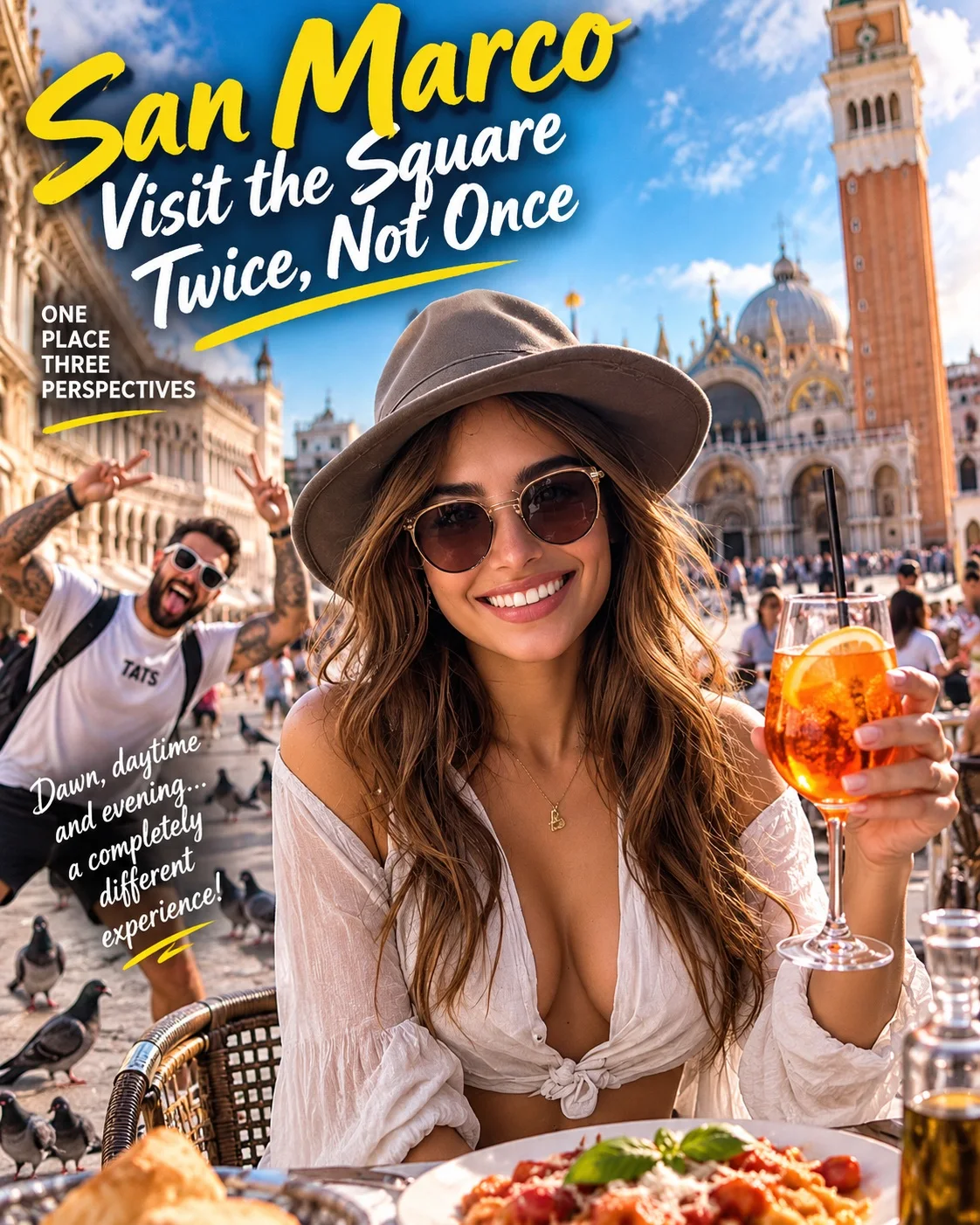
San Marco is the Venice of postcards — and for good reason. This is where the Republic's political and religious power was concentrated for over a thousand years, and the density of landmarks here is unmatched anywhere else in the city.
What's here
Piazza San Marco itself, Napoleon's famous "drawing room of Europe," ringed by arcades and framed by the Basilica di San Marco and its Byzantine mosaics. Beside it, the Doge's Palace (Palazzo Ducale) — the seat of Venetian government for centuries — and the Campanile, whose viewing platform gives the best orientation shot in the city. Just off the piazza, the Bridge of Sighs connects the palace to the old prisons.
How to actually see it well
The square is at its most crowded from mid-morning to late afternoon, when day-trip groups from cruise ships and the mainland converge. Arriving at opening time, or in the hour before sunset, gets you a genuinely different experience of the same square. Booking timed entry to the Basilica and the Doge's Palace in advance saves real queueing time in peak season.
Beyond the piazza
San Marco sestiere extends well beyond the square itself — the streets toward the Rialto Bridge hold Venice's most concentrated shopping, while quieter pockets toward La Fenice opera house reward a slower wander once you're away from the main routes.
Practical notes
This is the most expensive sestiere to eat and stay in — a short walk toward Castello or across a bridge into San Polo typically gets you the same quality for less. Public toilets and drinking-water fountains (nasoni) are marked on official tourist maps and worth locating early in a hot day.