
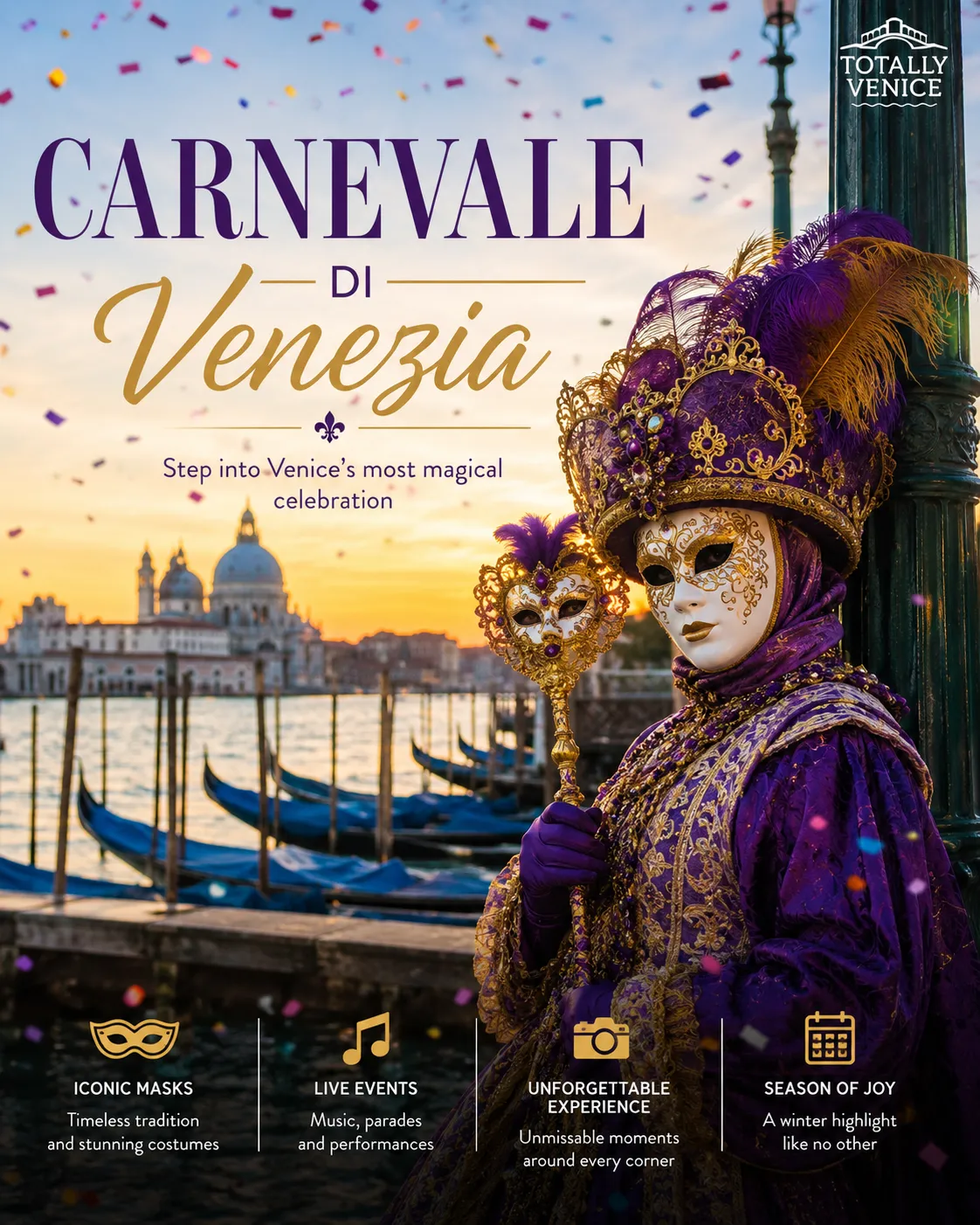
Venetian Carnevale is one of the oldest and most recognisable carnival traditions in the world, with roots reaching back to at least the 12th century.
Why the masks
Under the Republic, Venice's rigid social hierarchy briefly dissolved during Carnevale: a mask made noble and commoner, patrician and servant, momentarily indistinguishable. Masks also let Venetians move through the city's dense, everyone-knows-everyone social fabric with genuine anonymity — for gambling, romance, or simply speaking more freely than usual. Napoleon banned the festival in 1797 after the fall of the Republic, and it stayed dormant for most of two centuries before a deliberate civic revival in 1979 brought it back.
The classic masks
- Bauta — a stark white mask with an angular jawline, historically worn with a black cape and tricorn hat; its shape let the wearer eat and talk while remaining unrecognisable.
- Moretta — a plain oval mask traditionally held in place by a button gripped between the teeth, worn by women, and effectively silencing the wearer.
- Medico della Peste ("plague doctor") — the long-beaked mask, originally a functional design (the beak held aromatic herbs) from Venice's plague-era physicians, now one of the festival's most photographed images despite its grim origin.
The modern festival
Today's Carnevale runs for roughly two weeks leading up to Shrove Tuesday, with a packed calendar of costume parades, masked balls (many ticketed and often expensive), and the Flight of the Angel — a costumed performer's cable descent from the Campanile into Piazza San Marco that opens the festival.
Visiting during Carnevale
Expect the biggest crowds and highest prices of the Venetian calendar. Book accommodation as far ahead as possible, and know that many of the best photo opportunities — costumed figures posing quietly in back campi — happen away from the packed main square, especially in the early morning before the crowds arrive.