
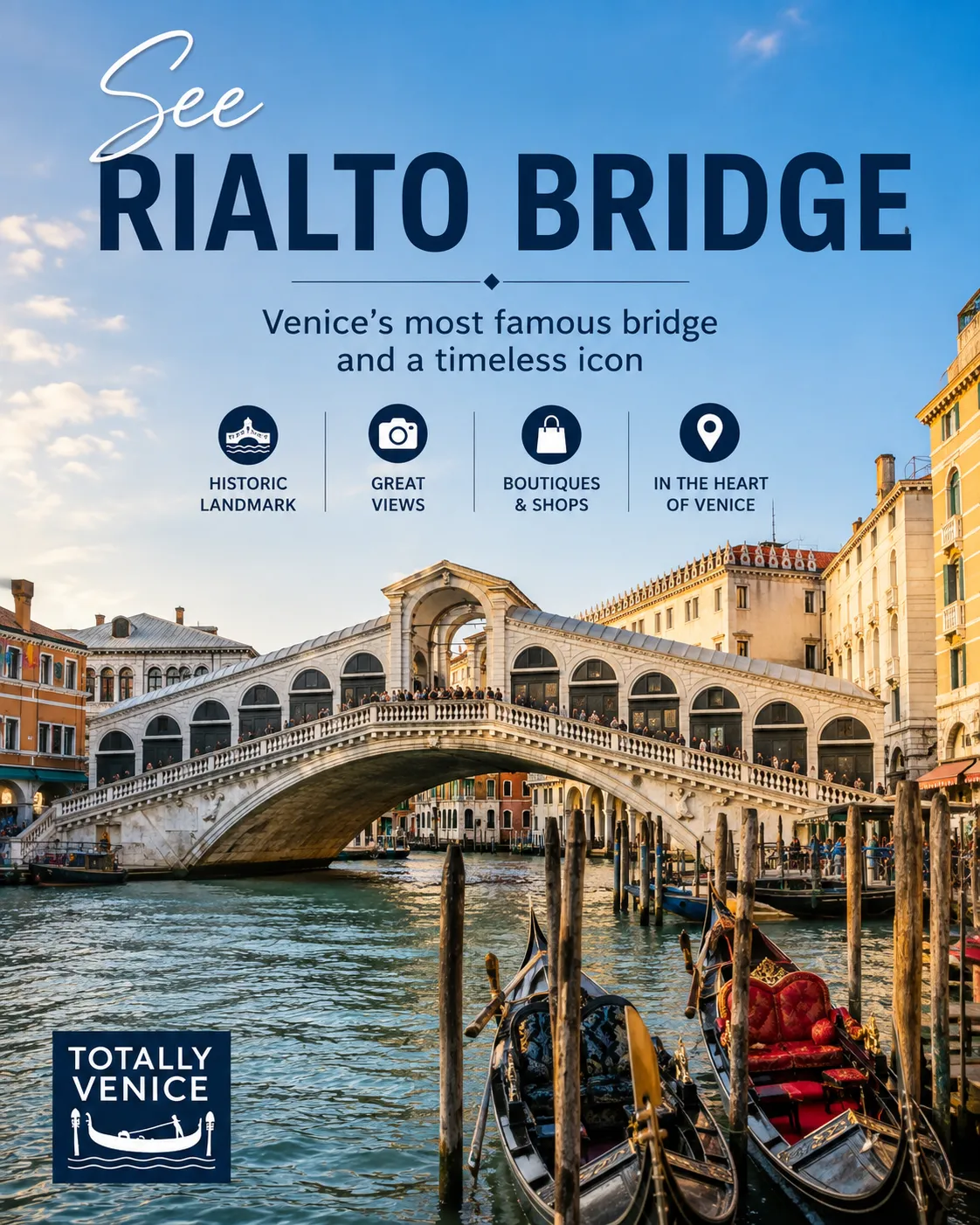
For centuries, the Rialto was the only bridge across the Grand Canal, and the surrounding sestiere was Venice's commercial heart — a role it still plays today, just with more selfie sticks.
The bridge
The current stone bridge, completed in 1591, replaced a series of wooden predecessors (one of which famously collapsed under crowd weight in 1444). Its single, steep stone arch and the shop-lined arcade along its top are instantly recognisable, and the bridge remains one of the best free viewpoints over the Grand Canal's boat traffic.
The market
At the bridge's foot on the San Polo side, the Rialto Market has operated in some form since the 11th century. The Pescaria (fish market) runs mornings, Tuesday to Saturday, with the day's catch laid out on ice — genuinely worth a look even if you're not cooking, as a slice of working Venice rather than a tourist attraction. The adjoining Erberia (produce market) keeps similar hours.
Around the bridge
The streets fanning out from Rialto on both banks hold some of the city's oldest bacari (wine bars), many of which have served market workers their morning ombra (small glass of wine) for generations — a good spot to combine sightseeing with an authentic, inexpensive stop.
Practical notes
The bridge itself is at its busiest from mid-morning onward; crossing at dawn, or viewing it from a vaporetto on the Grand Canal, both avoid the worst of the foot-traffic bottleneck at the top of the stairs.