
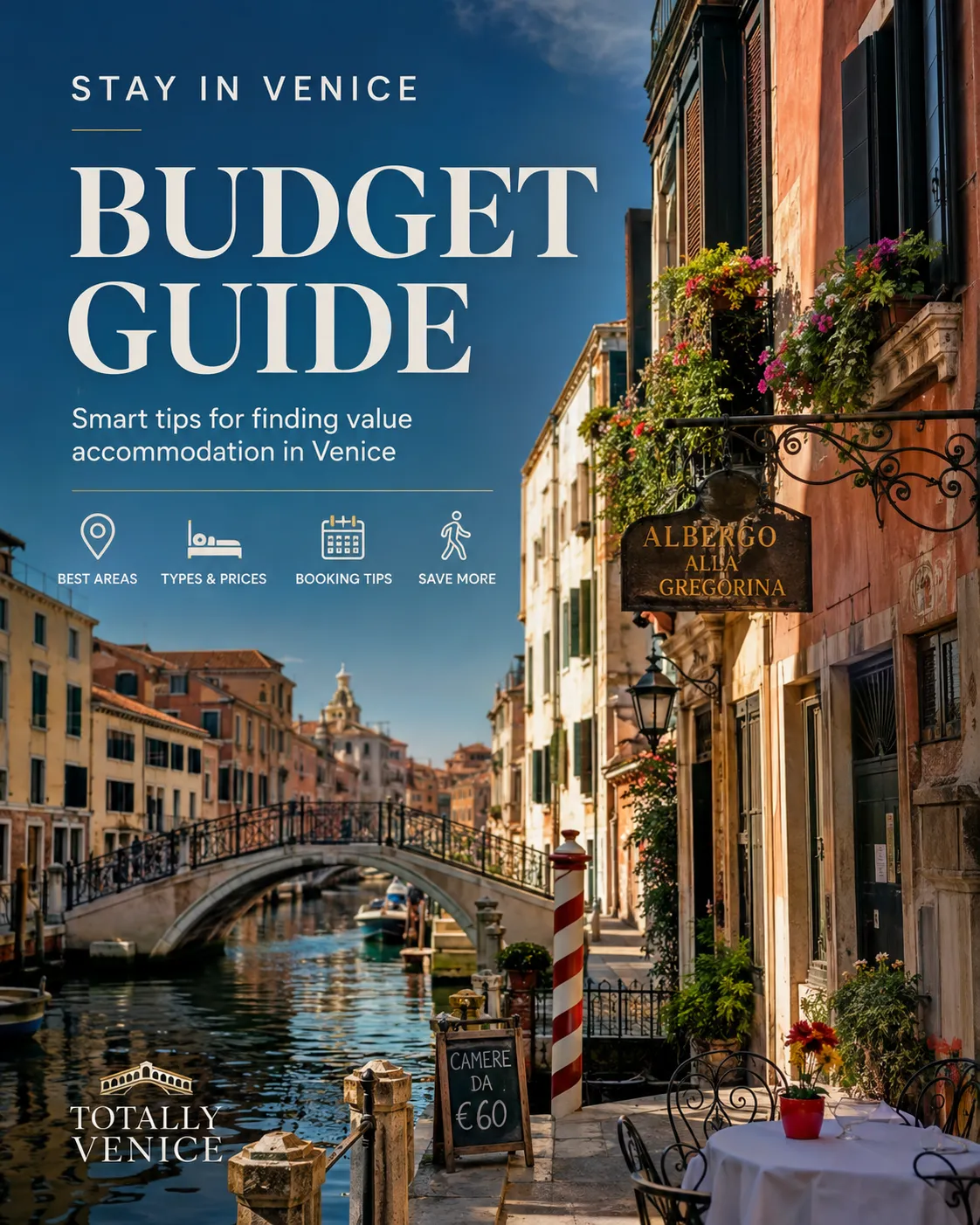
Venice can be expensive, but it is not a city where every traveller needs a luxury budget. The big costs are usually where you sleep, how often you use public transport, and how many paid attractions you stack into each day. Food can be surprisingly manageable if you step away from the most obvious tourist pitches.
Start with the costs you can actually predict
A useful Venice budget has four buckets: accommodation, local transport, food and paid sights. Build those first, then leave a buffer for coffee, cicchetti, luggage storage and the inevitable "we are already here" purchase.
The easiest mistake is to obsess over saving a euro on lunch while paying a large premium for the wrong hotel location or buying a transport pass you barely use.
Accommodation: location changes the maths
There is no single honest nightly rate for Venice. Prices move sharply with season, weekday, events, room type and how early you book. Instead of relying on a generic price band, compare the total trip cost of three different bases:
- Historic Venice: usually the most convenient. You can walk to many sights and return to your room during the day, which can reduce transport spending and wasted time.
- Lido or lagoon islands: sometimes better value for the room itself, but you are committing to more boat travel.
- Mestre on the mainland: often the strongest option when accommodation price is the priority. Trains reach Venezia Santa Lucia quickly, but you add a commute every day and lose the convenience of being able to wander Venice early and late.
If two hotels are close in price, count bridges, vaporetto dependence and the journey from your arrival point before choosing the cheaper-looking one.
Tourist tax: budget for it separately
Venice charges an overnight accommodation tax to non-residents. The amount varies by accommodation category, classification, location and season, and it applies for up to the first five consecutive nights. Some exemptions and reductions apply.
Treat the tax as a separate line item rather than assuming the room rate shown during your first search includes everything. Check the amount with your accommodation before arrival, especially for a family or a longer stay.
The Access Fee is currently not a visitor cost
Venice's 2026 Access Fee trial ended on 26 July 2026. From 27 July 2026, the official Venezia Unica system says the fee does not apply and no payment or exemption request is required. Any future application is to be decided by the Municipality.
During the 2026 trial, the fee was €5 when paid early and €10 closer to the visit date on 60 selected days, while people staying in accommodation within the Municipality of Venice were exempt from purchasing it for the relevant stay.
Do not add an Access Fee to a current trip budget unless the Comune announces a new applicable period. Check the official rules again before travel rather than relying on an old article or booking-site warning.
Vaporetto costs can become a major line item
Walking is free and is how most people experience central Venice. Boats become expensive when you use them casually without planning.
ACTV currently lists the standard visitor 75-minute Rete Unica ticket at €9.50. Time-limited visitor tickets are €25 for 24 hours, €35 for 48 hours, €45 for 72 hours and €65 for 7 days. These figures can change, so confirm them on ACTV before travel.
A pass is not automatically a bargain. If you stay centrally and mostly walk, a handful of single journeys may cost less. A pass becomes much easier to justify when you plan an island day, repeated cross-city rides, a Lido visit or mobility-related boat use.
For eligible travellers aged 6–29, ACTV also advertises a €33 Rolling Venice + 72-hour transport offer. Check eligibility and current conditions before buying.
Build the transport plan before buying the pass
Sketch your first two days and count real boat journeys. Do not count hypothetical rides you might take because a pass exists.
For example, a traveller who walks on day one and takes one scenic vaporetto ride may not need a multi-day pass. Someone visiting Murano and Burano, staying away from the centre and using boats morning and night is in a completely different position.
Airport transport is another separate cost: the ordinary €9.50 visitor ticket does not cover every airport service, so do not assume your city pass includes the transfer you intend to use.
Food: spend where it improves the trip
Venice has expensive dining, but the city also has a strong culture of smaller, simpler meals. A useful budget strategy is to mix meal formats rather than trying to find the cheapest possible restaurant three times a day.
Bacari and cicchetti are useful for a light lunch, snack or informal evening. Standing at the bar for coffee is normally cheaper than taking a prime outdoor table, particularly around major tourist squares. Supermarkets, bakeries and simple takeaway food can also keep one meal inexpensive without turning the whole trip into a food-saving exercise.
The biggest warning is location. A beautiful front-row table beside a famous landmark is part meal and part real-estate purchase. If that view matters to you, budget for it deliberately. If it does not, walk a few streets away and choose the place for the food.
Paid sights: choose a few anchors
Venice can fill entire days without an admission ticket: walking Cannaregio, crossing quieter parts of Castello, exploring Dorsoduro, watching canal traffic and visiting churches that are free to enter can all be worthwhile.
For paid sights, choose the experiences that genuinely matter and book official timed entry where appropriate. Do not create an attraction checklist simply because you bought a museum pass or saw a "must-do" list.
A better approach is one major paid sight plus a neighbourhood, food stop and long walk. It usually produces a better day and prevents the budget from disappearing into admission fees.
Cheap decisions that can become expensive
A low room price in Mestre can stop being a bargain if you dislike commuting and keep buying extra transport. A cheap flight to a distant airport can cost more once transfers are added. A budget hotel reached over several bridges can be a poor choice with heavy luggage or limited mobility.
Compare door-to-door cost and effort, not just the first price shown on a booking screen.
A practical budget checklist
Before booking, price these items for your actual trip:
- accommodation for the full stay, including any taxes or mandatory charges;
- airport or railway-station transfer;
- likely ACTV tickets or the specific pass that fits your itinerary;
- the paid attractions you genuinely intend to visit;
- one realistic food allowance per day;
- a contingency buffer for weather, luggage, late changes or one spontaneous splurge.
If the total is too high, change the largest category first. Moving the stay by a week, switching base, shortening the trip by one night or dropping an unnecessary transport pass usually saves more than hunting for tiny discounts all day.
Where to save and where not to
Good places to save: walking instead of making short vaporetto hops, staying away from the most famous squares, eating some meals informally, filling a water bottle where appropriate, and booking only attractions you truly want.
Poor places to save: choosing an impractical room location, ignoring accessibility or luggage logistics, travelling without enough buffer for disruptions, or buying unofficial tickets from a source you do not trust simply because they appear cheaper.
Bottom line
A sensible Venice budget is less about finding a mythical "cheap Venice" and more about controlling the expensive decisions. Accommodation and transport deserve the most attention. The 2026 Access Fee season is over, overnight guests should still account for the separate tourist tax, and ACTV fares make it worth counting boat journeys before buying a pass.
Spend on the parts of Venice you came for, walk whenever it makes sense, and make the budget serve the itinerary rather than the other way around.