
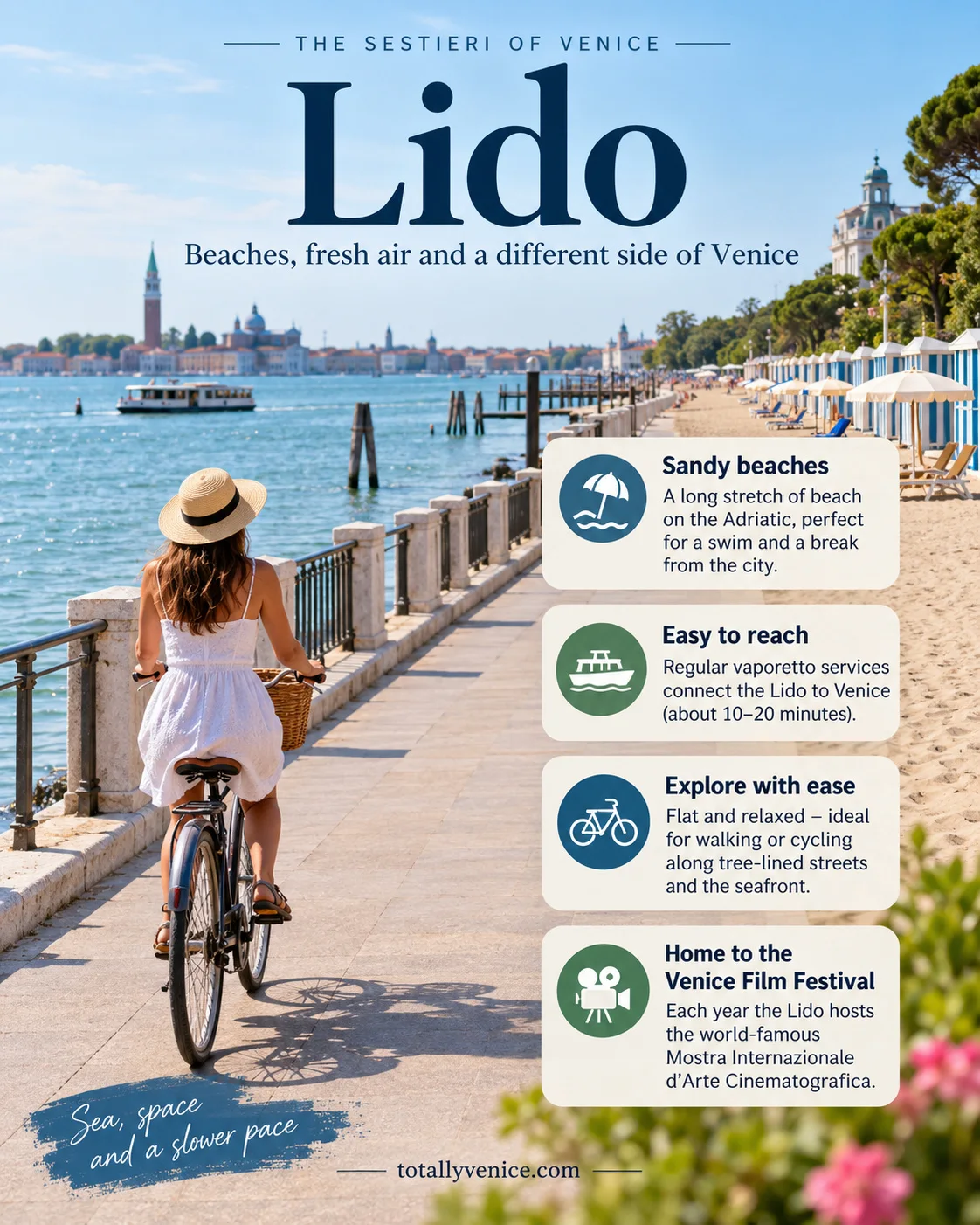
The Lido is the long, narrow barrier island separating the Venetian lagoon from the open Adriatic — and it's a genuinely different place from the historic centre in almost every way, right down to having actual cars and buses.
What's here
The Lido's main draw is its beaches, lined with early-20th-century bathing establishments and their rows of colourful cabins — a legacy of the island's history as a fashionable Belle Époque resort. Many beach clubs charge for sunbeds and cabin access, though free public beach stretches exist too.
The island is also home to the Venice Film Festival (La Mostra), held each autumn at the Palazzo del Cinema — one of the world's oldest film festivals, and a reminder that the Lido has been a genuine resort destination in its own right for well over a century, not just a beach adjunct to the main island.
A different pace
Wide avenues, art nouveau and rationalist-era villas, and actual road traffic give the Lido an entirely different rhythm from the car-free historic centre — some visitors find it a jarring contrast, others a welcome change of scene after a few days of narrow calli.
Practical notes
Regular vaporetto lines connect the Lido to San Marco and other points in the historic centre in about 15–20 minutes, making it an easy half-day or full-day addition to a longer Venice stay, particularly across the warmer months when the beaches are actually usable.