
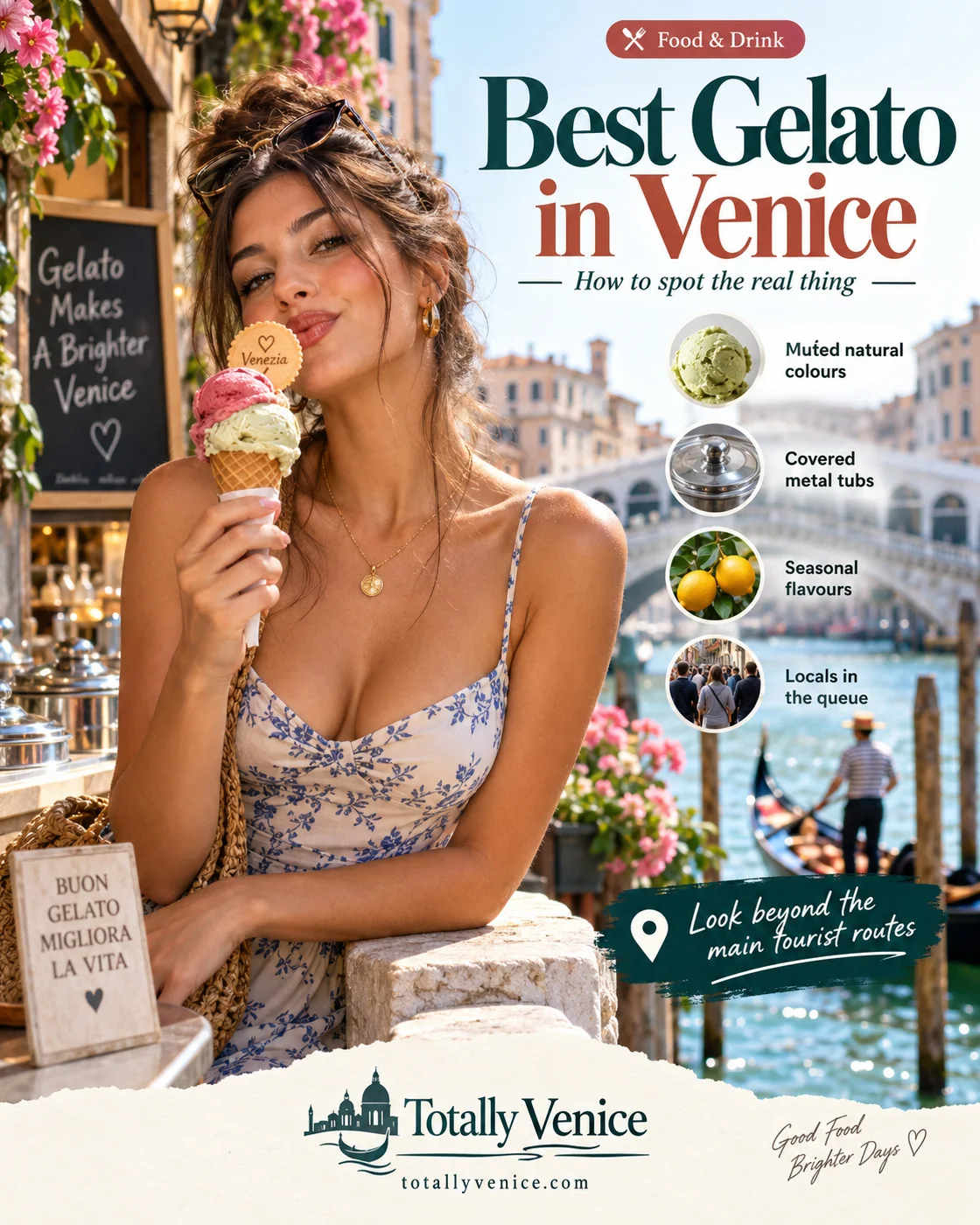
Venice has an enormous number of gelaterie, and a genuinely uneven mix of quality — a few reliable signs separate the artisanal (gelato artigianale) spots from the mass-produced, imported-mix versions aimed squarely at foot traffic near the main sights.
Signs of the real thing
- Muted, natural colours. Pistachio should look olive-grey-green, not neon; banana shouldn't be fluorescent yellow. Bright, saturated colours are one of the most reliable tourist-trap signals in any Italian city.
- Metal, covered tubs rather than tall, wind-blown mounds. Piled-high, glossy peaks are usually stabilised with additives to hold their shape under lights; proper gelato is denser and typically kept in flat, lidded tubs to prevent melting and oxidation.
- A shorter, seasonal flavour list. Fresh fruit flavours that only appear in season (a genuine fig or apricot gelato only in summer) suggest real ingredients rather than a syrup base used year-round.
- Locals in the queue. As with restaurants, a gelateria full of Venetians on their evening passeggiata rather than exclusively tour groups is a good sign.
Flavours worth trying here specifically
Beyond the usual pistachio and stracciatella, keep an eye out for fior di latte (a simple, excellent milk gelato that's the easiest flavour to judge quality by, since there's nowhere for a weak base to hide) and seasonal Veneto fruit flavours like fragola (strawberry) in late spring or fico (fig) in late summer.
Where to look, generally
As with food throughout Venice, a gelateria directly on the route between two major landmarks deserves a bit more scrutiny than one a few streets back in a residential campo — the same logic that applies to restaurants applies here too.