
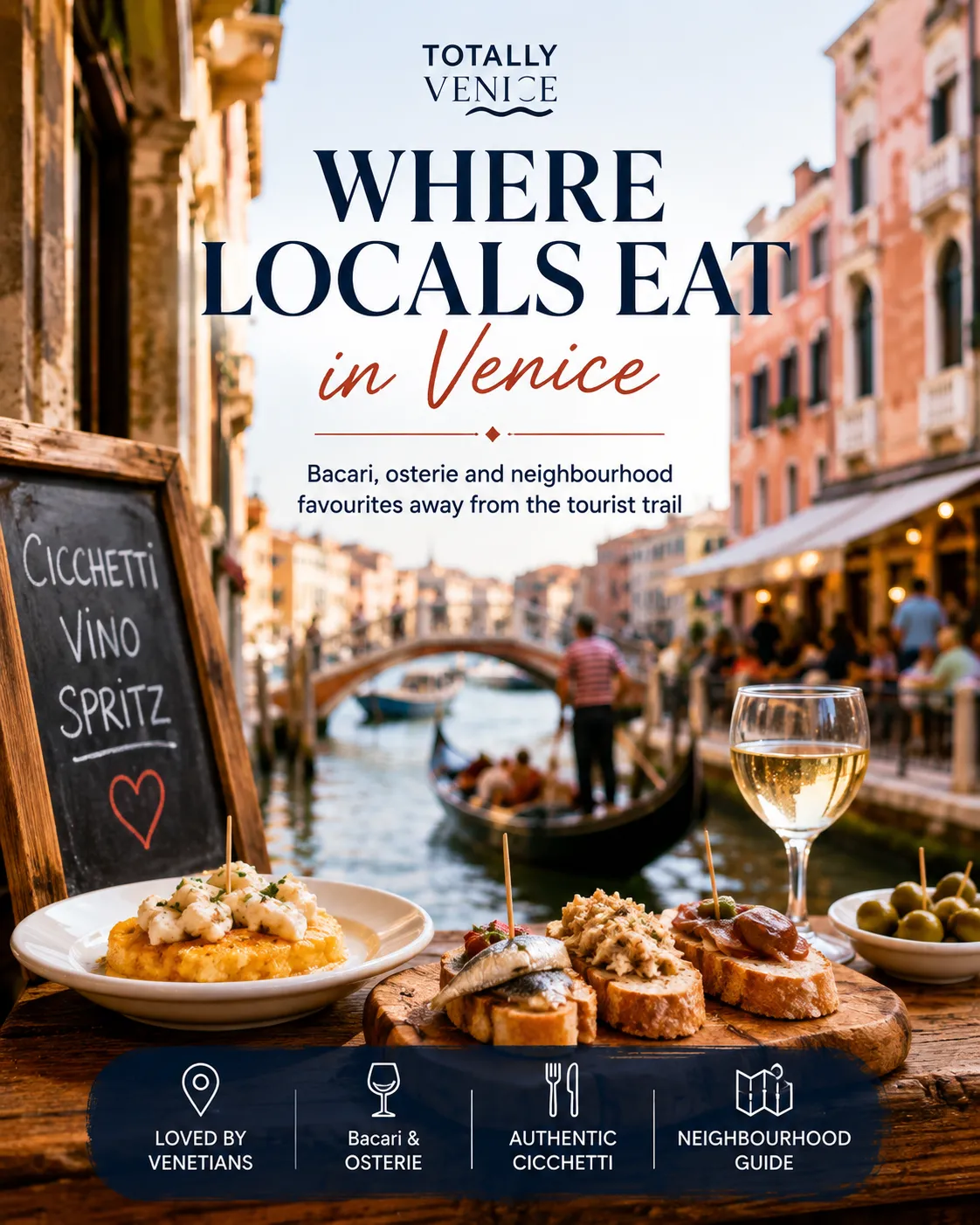
"Where do locals eat" is one of the most-asked, least-answerable questions about any tourist city — but Venice does have some reliable patterns worth knowing.
The signs of a genuine spot
- Short, seasonal, Italian-only menu — a sign the kitchen is cooking what's fresh rather than covering every tourist's expectations.
- No one outside touting for business — genuine neighbourhood trattorie rarely need to.
- Standing-room cicchetti counters with a local lunch crowd — particularly around noon on a weekday, when tourists are usually still sightseeing.
- Prices in euros only, clearly posted, cover charge included — opacity around pricing is one of the most consistent red flags near major landmarks.
Where to look
Cannaregio, away from the Strada Nova, has the highest concentration of everyday neighbourhood bars and trattorie relative to tourist footfall. The streets around the Rialto Market fill with market workers and locals at lunchtime, before the evening tourist crowd arrives. Giudecca and the quieter parts of Castello, both a little further from the main sightseeing routes, reward the same logic.
A simple rule
If a restaurant is directly on the route between two major landmarks, treat its menu with some skepticism. If it's two or three streets off that route, in a quiet campo with a handful of outdoor tables and no photo menu, it's far more likely to be cooking for its neighbours first.