
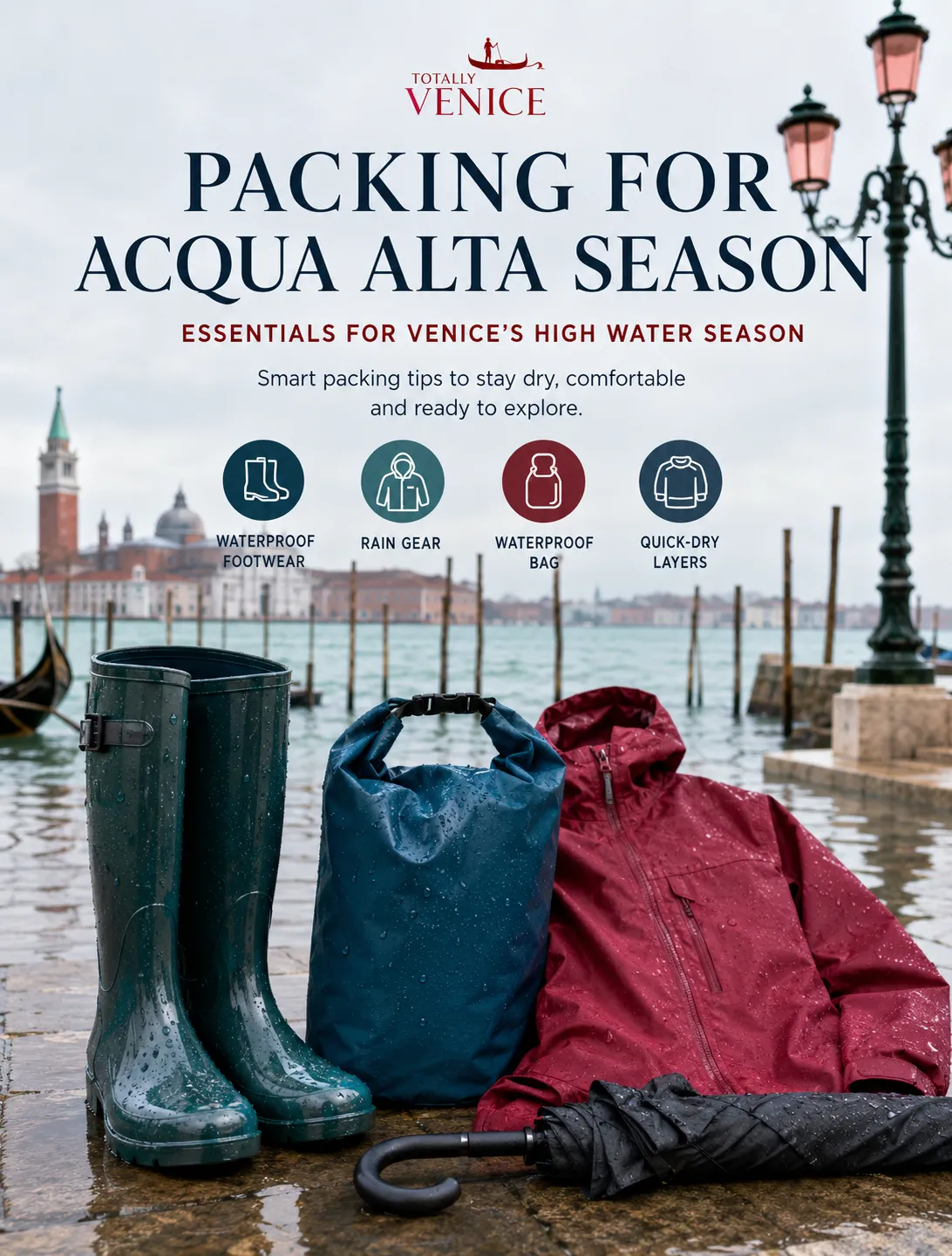
If your trip falls between roughly October and April, there's a real (if usually minor) chance of encountering some acqua alta — Venice's seasonal high water — and packing a little differently makes it a non-event rather than a soggy surprise.
What acqua alta actually looks like, most of the time
Since the MOSE flood barrier system became operational in 2020, the catastrophic flooding Venice was once known for is now rare — see our MOSE explainer for the full picture. What still happens regularly is minor, ankle-deep flooding in the lowest-lying spots (Piazza San Marco especially) on a handful of days each winter, usually for a few hours around high tide.
What to actually pack
- Waterproof, easily removable footwear. Rubber boots are the classic local solution, but a good pair of waterproof shoes you can slip on and off quickly at raised walkway barriers works fine for the ankle-deep, short-duration events that are now typical.
- A packable rain layer. Acqua alta often coincides with the kind of weather system that also just means rain — a proper layer covers both.
- A dry bag or two for a phone and camera if you're out during a wetter spell.
What you don't need
Full waders or anything extreme — genuinely severe flooding is now uncommon, and most visitors who plan a winter Venice trip never encounter more than a wet pavement and a raised walkway or two.
Checking before you go
The City of Venice publishes real-time and forecast tide levels, and hotels in flood-prone areas are generally well used to advising guests on the day. If you're visiting in peak acqua alta season and want to plan around it rather than just pack for it, see our best time to visit guide for the fuller seasonal picture.